
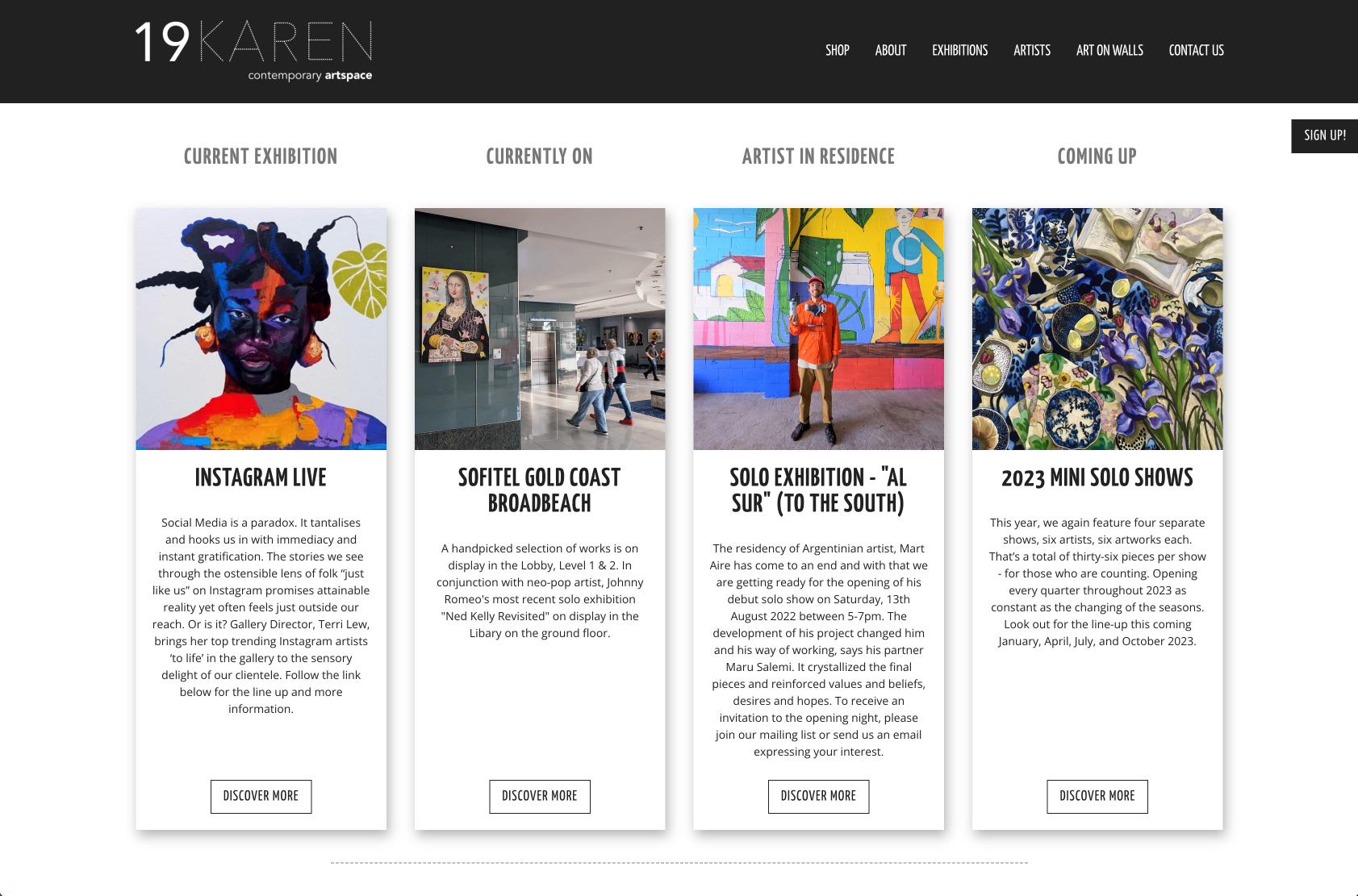
Artist Website Design: A Guide to Showcasing Your Work Online
A well-designed artist website is more than an online portfolio. It is a place to present your work, tell your story and help people take the next step, whether that means buying a piece, booking a commission or getting in touch about an exhibition.
Social media can help artists reach new audiences, but a website offers greater control over how work is presented and how visitors experience it. With a thoughtful design, your website can become a professional home for your creative practice.
Start with a clear purpose
Before choosing colours, layouts or typefaces, decide what your website needs to do. An artist selling original work may need an online shop, while an illustrator seeking commissions might prioritise examples of client projects and a clear enquiry form. A gallery of work, an artist biography and contact details are useful starting points for most sites.
Keep the main goal in mind throughout the design process. Each page should help visitors understand your work and find the information they need without unnecessary steps.
Let the artwork take centre stage
Your work should be the visual focus of the website. Choose a clean layout that gives images plenty of space and avoids distracting decoration. A restrained background, consistent spacing and a small number of complementary colours can help visitors concentrate on the pieces themselves.
Use high-quality images that represent the work accurately. Photograph or scan each piece in good light, check that the colours look natural and crop images consistently where appropriate. Include useful details such as the title, medium, dimensions and year. If a work is available for sale, make its status and price easy to find.
Organise your portfolio carefully
A portfolio should be easy to browse. Group work into clear collections or categories, such as paintings, printmaking, sculpture or commissioned projects. If you work across several styles or disciplines, helpful navigation can make it easier for visitors to find what interests them.
Be selective. A smaller collection of strong, relevant work often makes a clearer impression than a large archive with no obvious structure. You can still include older work on a separate page if it adds useful context to your practice.
Tell visitors who you are
An artist biography gives people context for the work. Write in a natural, straightforward style and include details that help visitors understand your practice, such as your influences, materials, location, exhibitions or training. The length and tone can vary, but it should feel personal and easy to read.
Consider adding a photograph of yourself or your studio if it supports the story you want to tell. A short statement about your approach can also help viewers connect the ideas behind your work with what they see in the portfolio.
Make the website easy to use on mobile
Many visitors will view your site on a phone or tablet. A responsive design adapts to different screen sizes, keeping text legible, images clear and navigation simple. Check that buttons are easy to tap and that important information is not hidden behind awkward menus.
Loading speed matters too, particularly when a site contains large images. Optimise image files so pages load efficiently without compromising visual quality. Clear page titles and concise text can also make the site easier to navigate.
Make it simple to get in touch or buy
Visitors should not have to search for your contact details. Include a visible contact link and provide a straightforward way to make an enquiry. If you accept commissions, explain the types of projects you take on and outline how the process works.
For an online shop, provide clear product descriptions, delivery information, payment options and returns details. Make the route from viewing an artwork to completing a purchase as simple as possible. If a piece is not for sale, you could invite visitors to enquire about similar work or future releases.
Build visibility with the basics of SEO
Search engine optimisation can help people discover your work through online searches. Use clear page titles and descriptions, and write useful headings that explain what each page contains. Add descriptive alternative text to images so that visitors using assistive technology can understand them, and search engines receive helpful context.
It can also be useful to include relevant details such as your name, artistic discipline and location in natural language. Avoid repeating keywords unnaturally: informative content and a well-organised site offer a better experience for visitors.
Keep your site current
An artist website should evolve alongside your practice. Update your portfolio when new work is ready, remove outdated information and check that links and contact forms still work. If you list exhibitions or events, keep dates and details accurate.
Regular updates help visitors see what you are working on and ensure your site continues to represent you well. A simple content plan, such as reviewing the site every few months, can make maintenance more manageable.
Create a website that feels like your own
The best artist website design balances strong visual presentation with clarity and ease of use. It gives your artwork room to speak, introduces visitors to the person behind it and makes the next step clear. By focusing on a clear purpose, thoughtful presentation and accessible navigation, you can create a website that supports your creative practice and helps your work reach a wider audience.
Eight Compelling Reasons to Design a Professional Artist Website
- Showcase your artwork professionally.
- Keep your portfolio organised and easy to browse.
- Build a distinctive online presence.
- Reach audiences beyond social media.
- Make commissions and enquiries easier.
- Sell artwork directly through your website.
- Help visitors discover your work through search.
- Share your story, exhibitions and creative process.
Challenges of Creating and Managing an Artist’s Website
- Can be costly to build and maintain.
- Needs regular updates to stay current.
- May take time to attract visitors.
Showcase your artwork professionally.
A professionally designed artist website gives your artwork a polished, dedicated space where visitors can appreciate each piece without distractions. High-quality images, thoughtful layouts and clear details about the medium, size and availability help present your work at its best. A well-organised portfolio also makes it easier for potential clients, galleries and buyers to explore your style and see the care behind your creative practice.
Keep your portfolio organised and easy to browse.
A well-organised artist website makes it easy for visitors to explore your portfolio and find work that interests them. Group pieces into clear categories, such as paintings, illustrations or commissions, and use simple navigation to guide people through your collections. A considered layout helps each artwork stand out, while consistent titles and details make the portfolio easier to understand. This creates a more enjoyable browsing experience and helps potential clients, buyers and galleries quickly connect with the work that suits them.
Build a distinctive online presence.
A thoughtfully designed artist website helps you build a distinctive online presence that reflects your creative identity. From the colours and typography to the way your work is arranged, every detail can express your style and set you apart. Unlike social media profiles, your website gives you greater control over how visitors discover and experience your art, creating a memorable destination that feels unmistakably yours.
Reach audiences beyond social media.
An artist website helps you reach audiences beyond social media by giving your work a permanent home that people can discover through search engines, links and recommendations. Unlike social platforms, where visibility can depend on changing algorithms, your website lets you present your portfolio, biography and contact details in one place, on your own terms. It can also connect you with potential buyers, galleries and collaborators who may not use the same social media channels.
Make commissions and enquiries easier.
An artist website makes it easier for potential clients to enquire about commissions by putting your contact details, services and examples of past work in one place. A clear enquiry form can guide visitors to share useful information, such as their budget, preferred timescale and project requirements, helping you respond more efficiently. By explaining how your commission process works, you can set expectations from the outset and make it simpler for the right clients to take the next step.
Sell artwork directly through your website.
Selling artwork directly through your website gives you greater control over how your work is presented and sold. You can set your own prices, share the story behind each piece and communicate directly with buyers, without relying solely on third-party marketplaces. A simple, secure online shop also makes it easy for visitors to browse available work and purchase it whenever it suits them.
Help visitors discover your work through search.
A well-designed artist website can help new audiences discover your work through search engines. Clear page titles, descriptive text and relevant image descriptions make it easier for search engines to understand what you create and connect your pages with people looking for artists, artwork or commissions. Unlike social media posts, which can quickly disappear from view, useful website content can continue attracting visitors over time.
Share your story, exhibitions and creative process.
An artist website gives you space to share the story behind your work in your own words. Introduce your influences, describe your creative process and show how your ideas develop from early sketches to finished pieces. You can also keep visitors up to date with past and upcoming exhibitions, events and projects, helping collectors, curators and art lovers connect with your practice beyond the artwork itself.
Can be costly to build and maintain.
One potential drawback of artist website design is the cost of building and maintaining a professional site. Design, development, hosting, domain registration and online shop fees can add up, while ongoing updates, security and technical support may require further investment. For artists working to a limited budget, these expenses can be difficult to manage, so it is worth planning costs in advance and choosing a solution that suits both current needs and future growth.
Needs regular updates to stay current.
One drawback of an artist website is that it needs regular updates to stay current. New work, exhibitions, prices and contact details should be added promptly, while outdated information and broken links need removing. This ongoing maintenance takes time and can be easy to neglect when you are focused on creating, but a neglected website may give visitors the impression that your practice is no longer active.
May take time to attract visitors.
A new artist website may take time to attract visitors, even if it looks polished and showcases your work well. Building an audience through search engines, social media, mailing lists and word of mouth usually requires consistent effort, and results may not appear straight away. Artists should therefore treat their website as a long-term investment and keep it updated while finding practical ways to guide people to it.
