
Outsource Website Design: A Practical Guide for Businesses
A professional website can help a business attract customers, explain its services and build trust. But designing and developing a website takes time and specialist skills that may not be available in-house. For many organisations, outsourcing website design is a practical way to get the expertise they need without building a full internal team.
Whether you are creating a new website or refreshing an existing one, the right external partner can help turn your goals into a clear, user-friendly online experience. Here is what to consider before you outsource.
What does it mean to outsource website design?
Outsourcing website design means hiring an external freelancer, agency or specialist team to plan and create your website. Depending on the provider, their work may include research, visual design, content structure, development and testing.
Some businesses outsource the entire project, while others bring in outside support for particular tasks, such as creating a new visual identity, improving the mobile experience or developing an online shop. The scope should be agreed at the start so everyone understands what is included.
Why outsource website design?
Access specialist skills
A website project can involve several disciplines, including user experience, visual design, coding, accessibility and search engine optimisation. An external team may bring together people with different areas of expertise, giving you access to skills that would be difficult or costly to recruit in-house.
Make better use of your time
Planning, designing and building a website can take significant time. Outsourcing can allow your staff to focus on day-to-day responsibilities while specialists manage the agreed project work. Your team will still need to provide information, make decisions and review progress, but it does not have to carry out every task itself.
Scale support to suit the project
External support can be arranged for a single project or on an ongoing basis. This can be useful if you need a one-off redesign, additional capacity during a busy period or help with regular improvements after launch.
Benefit from an outside perspective
People who are close to a business can find it difficult to see its website as a first-time visitor might. An experienced designer can ask fresh questions about the audience, content and user journey, helping identify areas that may be confusing or hard to navigate.
When is outsourcing the right choice?
Outsourcing may be worth considering if your business:
- Does not have the in-house skills or capacity for a website project
- Needs a new website or a substantial redesign
- Wants to improve usability, accessibility or mobile performance
- Needs specialist development, such as booking or e-commerce features
- Would benefit from an independent review of its existing website
It may be less suitable if the project requirements are unclear, there is no time available for feedback, or you expect a provider to make business decisions without your input. Successful outsourcing relies on collaboration as well as technical expertise.
How to choose a website design partner
Review relevant experience
Look at examples of previous work and consider whether the provider has tackled projects with similar audiences, requirements or technical needs. A portfolio should help you understand the quality and range of their work, but it is also useful to ask what they personally contributed to each project.
Ask about their process
A reliable provider should be able to explain how they move from initial discussions to launch. Ask how they handle research, design approval, development, testing and post-launch support. Find out who your main contact will be and how often you can expect updates.
Clarify what is included
Ask for a written proposal that sets out the project scope, deliverables, timescales, fees and responsibilities. Check whether the price includes content writing, image sourcing, hosting, training, maintenance and any third-party software or licences.
Discuss ownership and access
Before work begins, establish who will own the finished design, code and content, and make sure you will have appropriate access to the website, domain name and hosting account. Any ongoing fees or restrictions should be explained clearly.
Consider communication and compatibility
Good communication makes a difference to the project. Choose a partner who listens to your requirements, explains technical matters clearly and is comfortable discussing concerns. Agree how feedback will be shared and who in your organisation is responsible for approvals.
Preparing for an outsourced website project
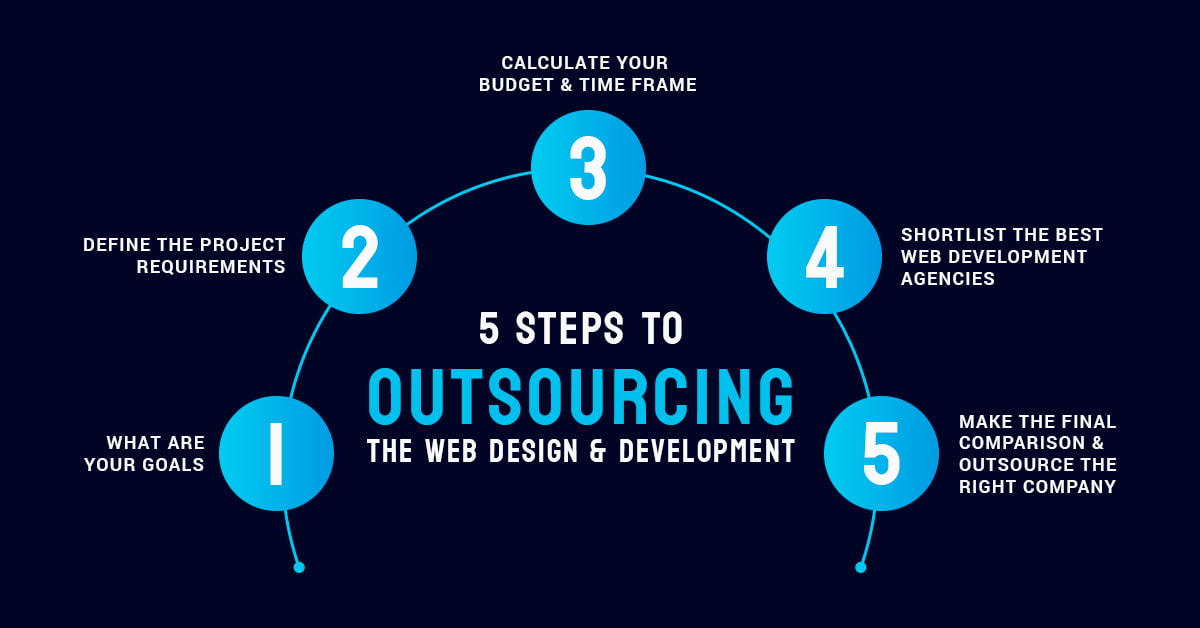
Before approaching providers, write down what the website needs to achieve. Consider your target audience, the information visitors need, the actions you want them to take and any problems with your current site.
It can also help to prepare:
- A list of essential features and optional ideas
- Examples of websites you like, with notes explaining why
- Existing brand guidelines, logos and approved imagery
- Information about your current platform, domain and hosting
- A realistic budget and preferred launch date
Be open about what is not yet decided. A good partner can help you refine the brief, but clear priorities make it easier to provide an accurate proposal and avoid unnecessary work.
Common pitfalls to avoid
Choosing on price alone
The lowest quote may not cover everything your project needs. Compare proposals carefully and check the scope, quality of work, support arrangements and likely additional costs—not just the initial fee.
Starting without a clear brief
Unclear goals can lead to repeated revisions, delays and a website that does not meet business needs. Agreeing the audience, purpose and key requirements before design work begins helps keep the project focused.
Leaving content until the last minute
Website content affects page layouts, navigation and the overall user experience. Decide early who will write and approve the copy, and allow enough time for editing and fact-checking.
Forgetting what happens after launch
A website needs ongoing attention. Discuss who will handle updates, security, backups and technical support once the project is complete. Make sure your team knows how to manage everyday changes if these are not covered by a support agreement.
Making outsourcing work
Outsourcing website design works best when responsibilities are shared clearly. Your external partner brings design and technical expertise; your team brings knowledge of the business, its customers and its priorities. Regular check-ins, timely feedback and agreed decision-makers can help the project stay on track.
Before signing an agreement, make sure you understand the scope, payment schedule, timescales, ownership terms and support options. With the right preparation and a suitable partner, outsourcing can be an effective way to create a website that serves your business and its customers.
Top 8 Advantages of Outsourcing Website Design for Your Business
- Access specialist design skills
- Free up your team’s time
- Scale support to suit your needs
- Get a fresh perspective
- Launch your website sooner
- Avoid the cost of hiring in-house
- Benefit from the latest expertise
- Focus on your core business
Challenges of Outsourcing Website Design: Control, Communication, and Cost Concerns
- Less direct control over day-to-day design decisions.
- Communication gaps can cause delays or misunderstandings.
- Ongoing updates and support may add extra costs.
Access specialist design skills
Outsourcing website design gives your business access to specialist skills that may be difficult or costly to develop in-house. Experienced designers understand how to create clear, engaging layouts that reflect your brand and work well across different devices. They can also bring expertise in areas such as user experience, accessibility and conversion-focused design, helping you build a website that is both attractive and easy for customers to use.
Free up your team’s time
Outsourcing website design can free up your team’s time to focus on the work they do best. Rather than managing every stage of the design and development process in-house, your staff can concentrate on serving customers and running the business, while an external specialist handles the agreed website tasks. Your team will still need to provide information and feedback, but outsourcing can reduce the day-to-day workload and help keep the project moving.
Scale support to suit your needs
Outsourcing website design lets you scale support to suit your needs. You can bring in a specialist for a one-off redesign, request extra help during a busy period or arrange ongoing support for regular updates and improvements. This flexible approach means you can access the right skills when you need them, without committing to a permanent in-house team.
Get a fresh perspective
Get a fresh perspective
An external website design team can look at your business through the eyes of a first-time visitor. Without being tied to familiar ways of doing things, they may spot confusing navigation, unclear messages or missed opportunities to improve the customer journey. Their fresh perspective can help you make your website more intuitive, engaging and focused on what your audience needs.
Launch your website sooner
Launch your website sooner
Outsourcing website design can help you get your site live sooner, especially when your in-house team has limited time or specialist skills. An experienced designer or agency can manage the work efficiently, from planning and design through to development and testing, while your team focuses on providing information and feedback. With clear goals and timely decisions, you can avoid unnecessary delays and bring your new website to customers sooner.
Avoid the cost of hiring in-house
Outsourcing website design can help you avoid the cost of hiring an in-house team. Instead of paying salaries, recruitment costs, employee benefits and ongoing training, you can bring in external specialists for the work you need. This gives your business access to professional skills while keeping costs more flexible, particularly if you only need support for a one-off project or occasional updates.
Benefit from the latest expertise
Outsourcing website design gives your business access to specialists who work with the latest tools, technologies and design practices. They can bring fresh ideas and up-to-date knowledge of areas such as mobile usability, accessibility and search engine optimisation, helping ensure your website meets modern expectations. This expertise can be especially valuable when your in-house team lacks the time or experience to keep pace with a fast-changing digital landscape.
Focus on your core business
Outsourcing website design lets your team focus on the work it does best. Rather than spending time managing design tasks, learning new tools or troubleshooting technical issues, your staff can concentrate on serving customers and running the business. You still provide direction and feedback, while your design partner handles the specialist work and keeps the project moving.
Less direct control over day-to-day design decisions.
One potential drawback of outsourcing website design is having less direct control over day-to-day design decisions. Rather than making every adjustment yourself, you may need to explain your preferences to the external team and wait for them to make changes. This can slow down decisions or lead to results that do not quite match your expectations, particularly if communication is unclear. Agreeing approval stages, naming a main point of contact and sharing clear feedback can help keep the project aligned with your vision.
Communication gaps can cause delays or misunderstandings.
Communication gaps can cause delays or misunderstandings when website design is outsourced, particularly if expectations, feedback or project updates are not shared clearly. Differences in working hours, communication styles or technical knowledge can make it harder to resolve questions quickly, potentially leading to missed deadlines or design work that does not meet your requirements. Agreeing regular check-ins, clear points of contact and a straightforward feedback process can help reduce these risks.
Ongoing updates and support may add extra costs.
Ongoing updates and support can add to the cost of outsourcing website design. After launch, your website may need security updates, bug fixes, content changes or technical assistance, and these services are not always included in the original project fee. Before choosing a provider, check what post-launch support covers, how long it lasts and what additional work will cost, so you can budget for the website’s ongoing needs.
