
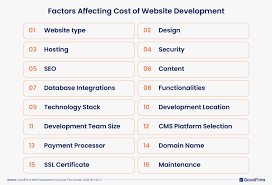
The Cost of Website Development: What You Need to Know
Website development cost is a crucial factor to consider when planning to establish a strong online presence. Whether you’re a small business owner, an entrepreneur, or a large corporation, understanding the factors that influence website development cost can help you make informed decisions and set realistic budgets.
Factors Affecting Website Development Cost
Several factors can influence the cost of website development:
- Complexity: The complexity of your website design and functionality plays a significant role in determining the cost. A simple informational website will cost less than a complex e-commerce platform with custom features.
- Customization: If you require custom design elements, features, or integrations, the cost will increase accordingly.
- Content Management System (CMS): Choosing a CMS like WordPress, Drupal, or Joomla can impact the cost based on customization requirements and ongoing maintenance needs.
- Responsive Design: Ensuring your website is responsive and mobile-friendly adds to the development cost but is essential for providing a seamless user experience across devices.
- SEO Integration: Incorporating search engine optimization (SEO) features into your website can enhance visibility but may require additional investment.
Understanding Pricing Models
Website development companies typically offer different pricing models:
- Fixed Price: A set price for the entire project, suitable for well-defined requirements and limited scope changes.
- Hourly Rate: Charging by the hour for work done, ideal for projects with evolving requirements or ongoing maintenance needs.
- Project-Based Pricing: Custom pricing based on specific project requirements and deliverables.
Tips for Managing Website Development Costs
To effectively manage website development costs, consider the following tips:
- Create a detailed project brief outlining your requirements and objectives.
- Solicit quotes from multiple web development companies to compare pricing and services offered.
- Avoid unnecessary customizations that may inflate costs without adding significant value to your website.
- Maintain open communication with your chosen web developer to address any budget concerns or scope changes promptly.
In conclusion, understanding the factors influencing website development costs and implementing effective cost management strategies can help you create a successful online presence within your budget constraints. By working closely with experienced web developers and setting clear expectations from the outset, you can achieve a high-quality website that meets your business goals without breaking the bank.
Understanding the Costs of Website Development: Key Factors and FAQs
- What factors influence the cost of website development?
- How does the complexity of a website affect its development cost?
- What is the typical pricing model for website development services?
- How can custom design elements impact website development costs?
- Is responsive design an additional cost in website development?
- What role does the choice of Content Management System (CMS) play in determining development costs?
- Are there any ongoing maintenance costs associated with website development?
- How can search engine optimization (SEO) integration affect the overall cost of a website project?
- What tips can help in managing and reducing website development costs?
What factors influence the cost of website development?
When considering the cost of website development, several key factors come into play that influence the overall pricing. The complexity of the website design and functionality, the level of customisation required, the choice of content management system (CMS), the implementation of responsive design for mobile compatibility, and the integration of search engine optimisation (SEO) features all contribute to determining the cost of website development. Understanding these factors is essential in making informed decisions and setting realistic budgets for creating a successful online presence.
How does the complexity of a website affect its development cost?
The complexity of a website significantly influences its development cost. A website’s complexity is determined by factors such as the design intricacy, functionality requirements, and custom features. More complex websites, such as e-commerce platforms with advanced product catalogues, payment gateways, and user accounts, require additional time and expertise to develop. As the complexity increases, so does the development cost due to the need for more extensive coding, testing, and integration of intricate features. Customisation and unique design elements also contribute to the overall cost of website development, making it essential to carefully consider the level of complexity required to achieve your online objectives within your budget constraints.
What is the typical pricing model for website development services?
When it comes to website development services, the typical pricing model often varies depending on the complexity and scope of the project. Common pricing models include fixed price, hourly rate, and project-based pricing. A fixed price model involves a set cost for the entire project, which is suitable for well-defined requirements with limited changes. On the other hand, an hourly rate model charges based on the hours worked, making it ideal for projects with evolving needs or ongoing maintenance. Project-based pricing offers custom quotes tailored to specific project requirements and deliverables. Understanding these pricing models can help clients choose the most suitable option based on their budget and project requirements.
How can custom design elements impact website development costs?
Custom design elements can have a significant impact on website development costs due to the additional time, expertise, and resources required to create and implement them. When incorporating unique design features such as bespoke graphics, animations, interactive elements, or complex layouts, developers need to dedicate more effort to coding and testing to ensure they function seamlessly across different devices and browsers. Custom design elements often involve creating tailored solutions from scratch, which can increase both the initial development cost and ongoing maintenance expenses. While these customisations can enhance the visual appeal and user experience of a website, it is essential for businesses to carefully consider their budget and objectives when deciding on the extent of custom design elements to include in their web development project.
Is responsive design an additional cost in website development?
When considering website development cost, one frequently asked question is whether responsive design incurs an additional expense. Responsive design, which ensures that a website adapts and displays optimally on various devices such as desktops, tablets, and smartphones, is often considered a standard requirement in modern web development. While some web development companies may include responsive design as part of their standard service offering without additional charges, others may treat it as an optional feature with associated costs. It is essential to clarify with your chosen web developer upfront whether responsive design is included in the base cost or if it requires an additional investment to ensure your website provides a seamless user experience across all devices.
What role does the choice of Content Management System (CMS) play in determining development costs?
The choice of Content Management System (CMS) plays a pivotal role in determining website development costs. The CMS selected for a website project can significantly impact the overall cost based on factors such as customization requirements, scalability, maintenance needs, and integration complexity. Opting for a popular CMS like WordPress may offer cost-effective solutions with a wide range of plugins and themes readily available, reducing development time and costs. Conversely, choosing a more bespoke or specialised CMS can lead to higher development costs due to the need for customisation and potentially limited support resources. Therefore, carefully evaluating the features and functionality offered by different CMS options is essential in making an informed decision that aligns with both budget constraints and long-term business objectives.
Are there any ongoing maintenance costs associated with website development?
Yes, ongoing maintenance costs are often associated with website development. Once your website is live, it requires regular updates, security patches, backups, and technical support to ensure optimal performance and functionality. These maintenance tasks are essential to keep your website secure, up-to-date with the latest technologies, and running smoothly for your visitors. Investing in ongoing maintenance not only helps prevent potential issues but also ensures that your website continues to deliver a positive user experience and supports your business objectives in the long run.
How can search engine optimization (SEO) integration affect the overall cost of a website project?
Integrating search engine optimization (SEO) into a website development project can have a significant impact on the overall cost. SEO integration involves implementing strategies to improve the visibility and ranking of a website on search engine results pages. This process may require additional time and expertise from web developers to optimize content, meta tags, URLs, and other elements for better search engine performance. Customizing the website design and structure to align with SEO best practices can also add complexity to the development process, potentially increasing costs. However, investing in SEO integration is crucial for driving organic traffic to the website and enhancing its online presence in the long run. By considering the importance of SEO from the outset of a website project, businesses can effectively budget for these additional costs and reap the benefits of improved search engine visibility and user engagement.
What tips can help in managing and reducing website development costs?
When it comes to managing and reducing website development costs, there are several key tips that can help you stay within budget without compromising on quality. Firstly, creating a detailed project brief outlining your requirements and objectives can provide clarity for both you and the web development team. Secondly, soliciting quotes from multiple web development companies allows you to compare pricing and services offered, helping you make an informed decision. Additionally, avoiding unnecessary customizations that may inflate costs without adding significant value to your website can contribute to cost savings. Lastly, maintaining open communication with your chosen web developer throughout the project can help address any budget concerns or scope changes promptly, ensuring a smooth development process while keeping costs in check. By implementing these tips effectively, you can successfully manage and reduce website development costs while achieving your desired online presence.
